Pottendorf
-
Pottendorf©
The Lower Austrian market town of Pottendorf belongs to the district of Baden. It borders Burgenland to the east. Its territory includes the cadastral municipalities of Pottendorf and Landegg as well as Siegersdorf and Wampersdorf. The castle - now Pottendorf Castle - was built around 1090 and was the heart of the village for a long time. In the early 19th century, the opening of a spinning mill brought great prosperity and ushered in a new industrial era. In 1835, it was considered the largest cotton yarn spinning mill in the monarchy and was only closed in 1976. Today, Pottendorf is a friendly rural community with great sights for relaxed family outings.
Pottendorf: an eventful castle history - from the Middle Ages to the present day
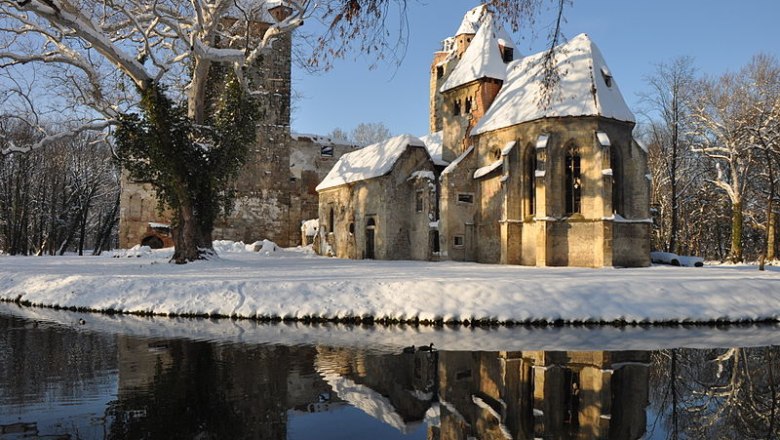
Around the year 1100, the "Lords of Pottendorf" - successors to Count Botho - built a moated castle. The castle changed hands many times over the centuries and was finally transformed into a Baroque palace in the 18th century. It was considered an important moated castle until after 1945. The coat of arms of the Esterházy family, who owned the castle for many years, can still be seen above the arched portal. Since 2005, the castle ruins have belonged to the municipality of Pottendorf and are gradually being revitalized.
Excursion tips for Pottendorf
In addition to the impressive castle, there are other worthwhile Excursion destinations in Pottendorf: for example, the parish church from the early 18th century, the branch church of the Exaltation of the Cross in Landegg from 1650 and the Rother-Hof. The latter, a former Esterházy administration building, is now home to a museum of local history. Another museum tip is the glass museum "Die gläserne Burg".